Thursday, June 29, 2006

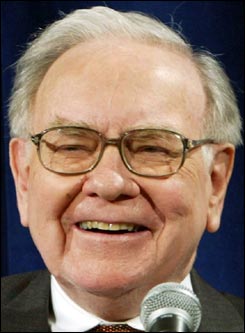
You don't have to be Warren Buffett

This blog is usually not about fundraising for a specific initiative. But given the situation in Indonesia, where the May 27 earthquake has faded from the headlines, I am going to bend that rule.

The good news is that there are some absolutely outstanding groups working at the village level to help people recover. The bad news is that not enough money has been getting to them.

As you may know:

  • Over 360,000 homes were damaged; at least half of these were destroyed completely.
  • As many as 1.5 million people are living in tents and shelters made from debris.
  • The health system is under enormous strain.
You don't have to be Warren Buffett or Bill Gates to make a big difference in a situation like this. $25 can buy a school kit to help get a kid back in school, $100 can help re-stock the books in the school library, and $250 can provide emergency shelter to 5 families. If you are in a position to do more personally or raise more in a group, then $4,750 will provide tools for 45 families to clean and rebuild their houses.

One of the most valuable members of the GlobalGiving community has come forward to say she will match the first $5,000 that come through in the next few days.

To give or to see what the options are, go here.


Monday, June 26, 2006

Warren Buffett Gives Money to Bill Gates


Bloomberg Radio called me today to ask what I thought about Warren Buffett's gift of over $30 billion, in annual increments of about $1.5 billion over the next few years, to the Gates Foundation (see article in Fortune).

I told them that it should be good news, but it could also have some downsides if not managed effectively.

This gift is smart because Buffett did not feel the need to establish his own new bureaucracy to give away his money. He partnered with someone. This is a rare and welcome thing in the philanthropy space.

The gift is also admirable because Buffett is requiring each annual increment to be given away in full each year. This means that the money has the potential for having impact more rapidly than otherwise.

The gift will be good news if it spurs even more high net worth families to become philanthropists during their lifetimes, rather than waiting until they die.

It will be good news if it marks the tipping point toward what Peter Drucker called the new economy of "meaning." Drucker noted that we are entering a period when the binding constraint for many people is not wealth or material goods, but meaning.

Buffett maintained for many years that he was going to give his money away when he died, but not before. Apparently, he changed his mind after watching how much meaning - call it enjoyment, fulfillment, or satsifaction - that his friend Bill Gates was getting from his work with the Gates Foundation.

But the gift could be less than good news if it leads the already huge Gates Foundation to become ponderous, bureaucratic, and top-down. Large organizations and companies face major hurdles in retaining their nimbleness and creativity as they grow.

For many years, I worked for the World Bank, which faced many of the same problems. The Bank grew rapidly in the 1970s. When I joined in the mid-1980s, it was filled with exceptionally smart people. But it had an increasingly sclerotic bureaucracy whose momentum kept it from innovating, and whose size and dominance in the sector led to arrogance and isolation from the real world in many cases.

Some of the larger, older foundations in this country have suffered from the same syndrome.

Let's hope that the Gates Foundation can find a way to avoid the same fate by leveraging the power of partner networks and bottom-up initiatives. That would enable it to be an energetic engine of innovation rather than a increasingly conservative force in the years ahead.

Friday, June 23, 2006

REAL international giving

The US is by far the largest source of philanthropic giving in the world, and most donors to projects listed on GlobalGiving come from the US.

But over the past year we have seen a steady stream of donors from other countries, not only in Europe but also India, Singapore, Japan, Korea, Australia, and Canada. This trend has accelerated recently, with almost twenty percent of all donors last week coming from outside the US.

Some of this increase is due to innovative companies like the Gap, which are now providing matching funds for their employees who live outside the US for specific GlobalGiving-listed initiatives focused on Indonesia Earthquake Recovery.

We have gotten emails from donors outside the US who are thrilled to have the opportunity to join others in supporting specific projects. These emails make me feel like we are making some progress toward our vision of GlobalGiving as a world-wide community of people working together to make our planet a better place.

Tuesday, June 20, 2006

Democracies and Dictators

It has been interesting to watch the widely divergent approaches of two web sites launched by the founder of eBay (Pierre Omidyar) and eBay's first president (Jeff Skoll) via their foundations.

Omidyar.net has puzzled many people since its creation. If you go to www.omidyar.net, for example, you can't figure out how to enter into the community. (Someone - presumably an existing community member - has to tell you to go to http://www.Omidyar.net/home). Further, especially at the beginning, no one was sure exactly what the community was FOR.

All the landing page says is:

We believe every individual has the power to make a difference.
We exist for one single purpose:
So that more and more people discover their own
power to make good things happen.

Once you log in, you can start a discussion about anything. But there is no real moderator or guiding hand. There is a rating system for members and posts similar to Slashdot, with the front page content determined by users' preferences and ratings. It is all very emergent.

By contrast, the Skoll Foundation's Social Edge is much more structured. Its tag line is "By Social Entrepreneurs. For Social Entrepreneurs." The site has a wide variety of news stories, blogs, indexes, interviews, polls, discussion groups, etc. Although SocialEdge depends heavily on users for content, it also clearly has an editor who sets the agenda and decides what goes on the homepage.

Last week, the editor of SocialEdge, Victor D'Allant, was in town for a series of presentations and discussions. When asked the difference between the two sites, he said it is like the difference between a benevolent dictatorship (with himself as the dictator!) and a pure democracy. Both have pros and cons - in fact they serve different purposes. In my experience, Omidyar.net is more about relationships and personalities, while SocialEdge is more about concepts and viewpoints.

The interesting thing - and a point made by Victor - is that it takes a while for communities to gain critical mass and a "personality." I joined both when they were lauched a couple of years ago, but I used them only occasionally at the beginning. Suddenly in the past few months they have both reached some sort of tipping point of usefulness, and I find myself visiting both much more often.

Monday, June 19, 2006

What is this Underdog thing?

Why is this blog called "Pulling for the Underdog?"

Because I like helping people realize their potential - especially those who have not gotten a fair shot so far.

This does not mean everyone will succeed. It means they should have a fair shot.

There are some open and performance-based systems in the world. But in many cases people don't have access to "show their stuff." And so even if their "stuff" is good, it does not get recognized and rewarded.

This holds true within organizations and companies as well as political systems.

One of the pre-cursors of GlobalGiving was the Innovation Marketplace. This was a physical event in the atrium of the World Bank in 1998. It allowed any Bank staff member, without exception or regard to rank, to pitch an idea for funding. At the end of that day, there was a grown man - a senior economist - crying, because he had never had his idea heard by the bureaucracy. If a senior economist at the World Bank was having trouble getting his idea heard, we realized how much harder it must be for most people in the world.

So we decided to do the Development Marketplace in, except this time we allowed almost anyone in the world to participate. This time we had 339 extraordinary finalists from around the world, ranging from supreme court justices from Latin America to NASA scientists to women from Uganda who had never been outside of their home provinces. None of these people had access to the World Bank system. When the Ugandan women asked me whether it was true that the World Bank president was going to hear their idea, I pretty much broke down.

At the end of the Development Marketplace, a woman from South Africa came up to us and said "I didn't win." "Well it's a competition," I replied, "Not everyone can win." "Well when does the secondary market start," she demanded to know, and continued: "Just because the World Bank didn't fund my idea doesn't mean that there are not others out there who will support it."

She was right, and that is how GlobalGiving was born. My co-founder and I resigned from the World Bank about six months later to start GlobalGiving.

GlobalGiving is about not only enabling your idea to be heard by the World Bank president. It is about enabling your idea to be heard - and potentially supported - by anyone in the world.

That is why I call it Pulling for the Underdog.

PS: The Ugandan women beat out the NASA scientist for funding.
PPS: I welcome your comments. Please provide your name and email.

Saturday, June 17, 2006

Is Philanthropy Driven by Results?

Tyler Cowen had an interesting column in the NYT on June 15 reporting on recent work by John List, an economist at the University of Chicago, and his colleagues.

List's research shows that providing a match of 1:1 does increase donations, but anything beyond that level of match has little effect. It shows that entering donors into a lottery can also increase giving, but that such a lottery effect can also be matched simply by having an attractive woman do the asking. Those findings will probably not surprise many seasoned non-profit marketers.

What is even more interesting is Cowen's take on what List's research says about donors.

"Professor List has yet to delve into the specifics of donor motives, but the obvious conclusion is that donors do not behave like customers... [D]onors often give to charities for reasons of pride. Monitoring a charity means worrying about the wisdom of contributing to that charity. Many donors would instead prefer simply to feel good about their generosity and thus they deceive themselves into thinking that all is going well.

Furthermore, many donors seek a sense of affiliation and wish to be a part of large and successful organizations — the "winning team," so to speak. Again, these donors do not focus on how, or if, they actually end up improving the world.
"It remains to be seen which particular innovations will stick or spread, but well-informed and self-critical donors are probably a key to improvement for nonprofit organizations.

If donors do not abandon failing causes, those efforts will continue. Perhaps the content of donor pride needs to change. Rather than taking pride only in their generosity, donors should also take pride in their willingness to confront unpleasant news. Many individual donors are reluctant to take such steps, but the result would be better charities and greater real generosity all around."


What is interesting here is that Cowen is comparing donations to consumption, not investment. I agree with this - I believe that donors' behavior and motivation is more akin to consumption than to investment.

I don't fully agree with the implications of Cowen's assertion that " Customers take great care to learn about the merits of different expenditures, on cars or on homes, for example." People DO choose their houses and cars based on quality - but only partly. Much of their behavior is influenced by what their neighbors and the people they want to associate with are buying. Emulating and associating with others are major factors in donors' giving behavior as well.

So the goal for philanthropy should be to introduce a heavier weighting of quality into the donation decision, while recognizing the reality of the other factors that drive donors' behavior. This is what we are trying hard to do at GlobalGiving - and our friends at Geneva Global are hard at work on this as well. And groups like College Summit (assisted by people like George Overholser) are leading the way in developing more transparent indicators for quality and accountability.

Friday, June 16, 2006

Pushing on the Flywheel

People often ask me how GlobalGiving grew by 5x last year. "What were the main factors driving that growth?" they ask.

Depending on who is asking, I have a variety of answers at hand - the tsunami, the general growth of online giving, our growing partner network, etc.

But the real answer is much harder to describe.

Fortunately, I was reading something by Jim Collins today, and he described perfectly my own experience of the last four years since we launched GlobalGiving in beta. In his terms, I would say that we are at about turn 4 of the flywheel:

"Right now, the flywheel is at a standstill. To get it moving, you make a tremendous effort. You push with all your might, you make a tremendous effort...and finally you get the flywheel to inch forward. After two or three days of sustained effort, you get the flywheel to complete one entire turn. You keep pushing, and the flywheel begins to move a bit faster. It takes a lot of work, but at last the flywheel makes a second rotation. You keep pushing steadily. It makes three turns, four, five, six turns. With each turn it moves faster, and then - at some point, you can't say exactly when - you break through. The momentum of the heavy wheel kicks in your favor. It spins faster and faster, with its own weight propelling it. You aren't pushing any harder, but the flywheel is accelerating, its momentum building, its speed increasing."

(Jim Collins, "Good to Great," Fast Company, October 2001)

Earthquake

GlobalGiving just posted a number of specific additional projects that you can support that will help Indonesians recover from the devastating earthquake. Nearby Mount Merapi continues to rumble as well, and the affected families really need help.

Here is one example, but there are more on the site:


Recovery and Education for Indonesian Children
Provide trauma recovery and education for children in the earthquake affected city of Yogyakarta. School kits including books, bags, and uniforms will be provided.
Theme: Education | Location: Indonesia | Need: $10,000
Give Now

Wednesday, June 14, 2006

Blogs and CB Radios

We probably all have friends who tell us more about their personal lives than we really care to know. And at some point most of us have revealed something personal that we later wish we hadn't.CB Radio

When I was a kid in the late '60s and early '70s, CB radio became a huge fad in rural Kentucky where I lived. Everyone had a CB radio in their car, and some had one in their homes. It was a great novelty to be able to talk - actually broadcast - on the CB radio. While some important information about traffic conditions, speed traps, and accidents was broadcast, much of the content was trivial or even embarrassing.

This was exacerbated by the fact that people often considered their transmissions anonymous, even though they had so-called "handles" and were often identifiable. Others did not think about what they were saying at all in the rush to simply have their voices heard on the air.

So when blogging began to catch on, I wondered whether it was just CB radio all over again - except this time in print and available to everyone in the world with a computer connection - not just everyone with a CB radio in a 5-mile radius. CB radios also provided some deniability - if you said something stupid or embarrassing, you could always deny it later, since no one recorded these transmissions.

By contrast, blogs are forever.

The blogging trend coincided with - is there any causation in either direction? - a new wave of confessionals in other media. One of the most notable is the Modern Love column in the NY Times. This column provides a forum for people to write candidly about the ups and downs of their lives, especially their relationships. What is striking about the column is the quality of the writing and the relatively prominent authors who are willing to put themselves out there.

I knew that this genre had hit the mainstream when Debora Spar, a professor at thDebora Spare Harvard Business School, wrote a column about childbearing and adoption. Very well written - and very personal and revealing. Although I don't know her personally, I have taken some classes from her, and she did not strike me as one of those people who are constantly providing "TMI" (too much information). But the column was quite moving, and she was doing a service by writing it.

Hmmm... It will still take me a while to loosen up.

Tuesday, June 13, 2006

Many2Many2Many2.....


Clay Shirky, Danah Boyd, Liz Lawley, Ross Mayfield, Sebastien Pacquet, and David Weinberger are doing a joint blog on social software here.

Earlier I blogged on a recent talk by Danah, and Clay has long set the standard for intelligence observation and analysis of trends in social interaction and related software on the web. Highly recommended reading.


Clay Shirky: