
Is it time for a new operating system?
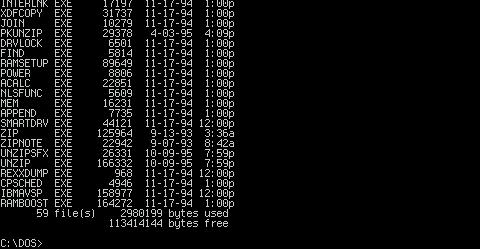 |
| DOS Operating System, circa 1982 |
That was the question I posed at a conference in Sydney last week hosted by the Lowy Institute and AusAID (Australia's foreign aid agency). The topic of the conference was how AusAID might catalyze the innovation needed to create much greater results with their aid programs in developing countries. The Australian government has pledged to double its foreign aid budget in the coming years, and AusAID wants to make sure it is well spent.
I began my presentation by talking about innovation in others fields, such as the computer industry. I first showed a picture of a punch card, which was the way we put information into the (mainframe) computer when I went to college in the late 1970s. I then showed how, over the next thirty years, competition led to rapid innovation. Many people recall what a huge leap forward the DOS operating system was in the early 1980s, since it allowed people to use PCs on their own desktops. Roughly ten years later, Microsoft released the Windows operating systems, which provided a graphical interface - another big advance.
All along, Apple had been selling its own graphical interface, but it struggled to avoid bankruptcy. Once Apple released its beautiful Mac OSX operating system, however, it rapidly gained market share, forcing Microsoft to develop (after several failures), a powerful new release of its Windows system. At the same time, Apple released the iPhone, a real game changer, especially when combined with Apple's App Store, which provided a distribution platform for hundreds of thousands of small, independent developers to release software applications. As a result of its competitive success, Apple's market value overtook that of Microsoft in May 2010, and Apple recently released the iPad, which some people think could revolutionize the industry again.
 |
| iPad, 2010 |
The competition between Microsoft and Apple was based on what the customer wanted and liked. Both companies experimented with many products, some of which failed and some of which succeeded. They got rid (mostly) of the failed products and continually and incrementally enhanced the successful ones. Every once in a while (as with the graphical interface and of the iPhone), they made giant leaps.
Contrast this with the aid industry, which, ironically, is managed in a centrally planned way even as it promotes market-based solutions to developing countries. The big aid agencies get very little feedback from the ultimate beneficiaries - the people they are trying to help. There has even been a recent trend around "partnerships and collaboration," whereby agencies agree to divide up their business and not compete. For example, the World Bank might agree to concentrate on telecoms in a set of countries, while the ADB handles health. This further insulates them from competition. The result has been little innovation over the past decades.
In my talk, I asked "What operating system is the aid industry using right now?" My answer was that, over the past sixty years, it may have not have progressed much beyond punch cards. Even though there have been improvements to the various processes, the aid business is still based largely on a "mainframe" model, with a small number of mainframes such as the World Bank, ADB, UN, and bilaterals such as USAID, MCC, DfiD, and AusAID dominating the market. What will it take to move toward a distributed "desktop" model of aid, and to stimulate the parallel creation of the DOS, Windows, Mac OSX, and even iPhone operating systems?
In my next post, I will talk about how GlobalGiving shows the possibilities of a distributed operating system for aid, and how pressure from our own competitors forces us to get better and better.


