That is from my interview with Ben Ramalingam. Ben is a consultant and writer who is currently writing a book about complexity and aid to be published by Oxford University Press. I recommend his blog Aid on the Edge of Chaos. My full interview follows:The whole system disguises rather than navigates complexity, and it does so at various levels – in developing countries and within the aid system. This maintains a series of collective illusions and overly simplistic assumptions about the nature of systems, about the nature of change, and about the nature of human actors.

Wednesday, January 05, 2011
Ben Ramalingam on Complexity and Aid


Art at a Distance

That is what Megan Lange at Robert Lange Studios (RLS) in Charleston, SC told me recently. Mari and I stopped by there while attending a conference in that city. The building and its space drew us in; the art kept us there.
Monday, January 03, 2011
Farewell! (But I'm not going far...)

==========================
December 2010
After ten fabulous years at GlobalGiving, I am fully turning over the reins to my co-founder, Mari Kuraishi, at the end of December 2010. This completes a transition that we began in 2008.
Although the decision to step down was hard, I feel that now is the right time. We have proven the concept, established a world-class online platform, and made a big impact. When we started ten years ago, the idea of an open-access approach to aid and philanthropy seemed radical; it is now becoming the new norm.
Tuesday, December 21, 2010
The tyranny of ideology
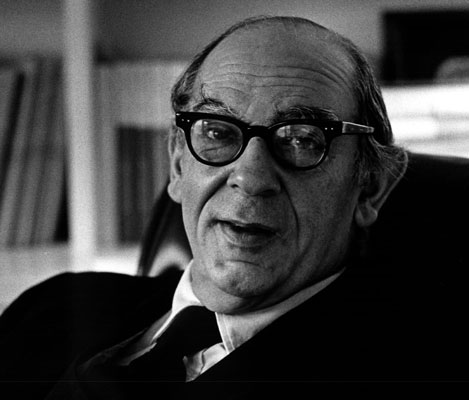 |
| Berlin |
The lecture is by Isaiah Berlin, delivered at Oxford University in 1955. The subject is Alexander Herzen, and more specifically his masterpiece My Past and Thoughts, written in 1868.
 |
| Herzen |
Listen to this episode
Monday, December 20, 2010
When aid works: RIP, Rene Le Berre

"René Le Berre, a French entomologist who helped inspire an international campaign that saved millions of West Africans from the parasitic disease river blindness, died Dec. 6 in L’Aiguillon-sur-Mer on France’s western coast. He was 78.
Onchocerciasis, the formal name for river blindness, had once been a scourge in the fertile river basins of tropical Africa."That obit is from the NYT.
When I joined the World Bank in 1986, my first memory is of my colleague Bruce Benton yelling in French over the phone across the Atlantic to Dr. Le Berre. I remember wondering what he was yelling about. Bruce did not join many meetings or participate in the various fads and "sexy" initiatives in the Bank. He just steadily and consistently worked with Dr. Le Berre and his program for twenty years, from 1985 to 2005, saving hundreds of thousands of lives, sparing millions of children from affliction, and reclaiming millions of hectares of land for habitation and cultivation. All at a nominal cost, representing a tremendous return on investment.
A very nice brief by the Center for Global Development on the impact of the river blindness control program is here.
Sunday, December 19, 2010
Of Wine and Experts

"I mean, S&P, Moody’s, Fitch, these people all rated securities that apparently completely tanked. So there’s obviously something in the demand for expertise, the imprimatur, which is not really about the fact that they do a good job. By the way, those organizations are not transparent either, just as the Wine Spectator isn’t. So there’s some similarity here that I think probably gives us a little insight into things that are much broader than wine and food."That is Orley Ashenfelter of Princeton University, quoted by Stephen J. Dubner in a recent Freakonomics column in the NYT. Experts have shown themselves to be no better than regular people in terms of guessing the price (and presumably, quality) of wines in blind taste tests. Professor Ashenfelter argues that the same phenomenon extends into many other arenas.
Saturday, December 18, 2010
Karin Christiansen on Transparency

“Transparency” has (re-)emerged as a buzzword in the development sector and is taking center stage in many development initiatives. Having measured the transparency of 30 major donors, Publish What You Fund (PWYF) released its Aid Transparency Assessment 2010 in October.
I had the opportunity to sit down and to chat with Karin Christiansen, Director of PWYF, during her recent visit to Washington, DC. We talked about (1) the motivations that led to the creation of an organization dedicated to streamlining transparency efforts; (2) what transparency means in development today; (3) examples of how transparency has had real impact; (4) obstacles and opportunities to developing systems that share universally comprehensive, transparent information; and (5) thoughts about future stepping-stones to achieve this goal.
The top performers from the Aid Transparency Assessment scored “fair” marks, yet PWYF and others are leading efforts to ensure that organizations across the sector enhance their transparency systems by providing not only more information but also better information.
Listen to the interview here.
Tuesday, December 14, 2010
Peter Buffett's Advent Calendar
Someone sent me a link to Peter Buffett's Advent Calendar. It brought a smile to my face. It's quirky and funny and personal. It has links to some great causes you can give to for the holidays, as well as some very nice holiday music. Each "day" brings something different - some music, a video, a reading. I especially like days 5 and 9 so far (I am only up to day 14, since my mom never let me jump ahead when I was a kid). Peter's recent book was listed as among the best of the year by Matthew Bishop of the Economist.

Monday, December 13, 2010
Expert Blinders

"The larger lesson is that the brain is a deeply constrained thinking machine, full of cognitive tradeoffs and zero-sum constraints. Those chess professionals and London cabbies can perform seemingly superhuman mental feats, as they chunk their world into memorable patterns. However, those same talents make them bad at seeing beyond their chunks, at making sense of games and places they can’t easily understand."That is from a piece by Jonah Lehrer in Wired (HT: April Harding). People who have deep expertise in certain areas often have difficulty incorporating new information from outside their narrow expertise. This is why it is important to have a good mix of both experts and crowds in many endeavors, especially social ones. It is not either-or, but both-and. Finding the balance is the key.
Sunday, December 05, 2010
Don't Follow the Leader

"In the final chapter, Seeley suggests five lessons we could learn from bees.
• Compose a decision-making group of individuals with shared interests. Here bees have a higher stake than us: all members of a colony are related (sisters) and nobody can survive without the group.
• Minimise the leader's influence on the group. Here we humans have much to learn.
• Seek diverse solutions to the problem. Humans realised only recently that diversity is good for a group.
• Update the group's knowledge through debate. Here again, bees are superior to us, as each scout's "dances" become less effective with time, no matter how good a new site is, while stubbornness can lead humans to argue forever.
• Use quorums to gain cohesion, accuracy and speed. Impressively, bees came up with this concept long before the Greeks."That is Tyler Cowen, discussing Thomas Seeley's new book Honeybee Democracy. These points resonate with my own experience.
Subscribe to:
Posts (Atom)